How Additive Manufacturing Is Reshaping Electronic Component Design
Designing modern electronic components often means making products smaller, lighter, and more capable while keeping development timelines and costs under control. Traditional manufacturing methods remain essential for production, but additive manufacturing gives engineers greater flexibility during product development. By creating complex prototypes, lightweight components, and custom parts directly from digital designs, additive manufacturing can speed up testing and make design changes easier to evaluate. For OEMs in aerospace, defense, medical, and other demanding industries, working with an experienced electronic manufacturer can help turn these capabilities into more efficient product development and reliable production.
Bringing a new electronic product to market has never been more challenging. Engineers are expected to design products that are smaller, lighter, stronger, and more capable than previous generations, all while shortening development timelines and controlling costs. Industries like aerospace, defense, and medical device manufacturing demand even more, requiring products that meet strict quality standards without sacrificing innovation.
Traditional manufacturing methods have delivered reliable electronic components for decades, but they are not always the fastest or most flexible option during product development. Design changes can require new tooling, extended lead times, and multiple prototype iterations before a product is ready for production.
That is why additive manufacturing has become an increasingly valuable tool in electronic manufacturing. For companies working with an experienced electronic manufacturer, additive manufacturing offers new opportunities to improve both product performance and manufacturing efficiency.
What Is Additive Manufacturing?
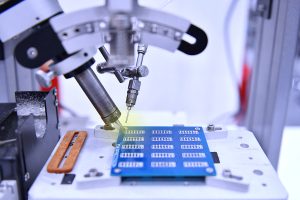
Unlike traditional manufacturing methods that remove material through cutting, drilling, or machining, additive manufacturing builds parts layer by layer using digital design files. Material is deposited only where it is needed, allowing engineers to produce highly detailed components with very little waste.
Although additive manufacturing is often referred to as 3D printing, today’s technology extends well beyond simple plastic prototypes. Modern systems can produce parts using advanced polymers, composite materials, and metals that are suitable for demanding industrial applications.
For electronic manufacturing, additive manufacturing is most commonly used during product development to produce fixtures, enclosures, mechanical components, tooling, and prototype parts that support electronic assembly.
“
Additive Manufacturing Is Changing Electronic Design
One of the greatest advantages of additive manufacturing is the freedom it gives engineers during the design process. Traditional manufacturing often requires designers to simplify parts so they can be machined or molded efficiently. Additive manufacturing removes many of these limitations by allowing complex geometries that would be difficult or impossible to produce using conventional methods.
This greater design flexibility allows engineers to optimize components for performance rather than designing around manufacturing constraints. As products continue to shrink in size while increasing in capability, that flexibility becomes increasingly valuable.
Accelerating the Prototype Process
Every successful electronic product begins with a prototype. The sooner engineers can build and evaluate a design, the sooner they can identify improvements before investing in production tooling or large manufacturing runs.
Additive manufacturing significantly shortens this process by allowing components to be produced directly from digital CAD files. Rather than waiting weeks for custom tooling or machined parts, engineers can often evaluate physical prototypes much sooner.
This faster development cycle allows design teams to test multiple concepts, validate performance, and refine products with greater confidence before production begins. For OEMs, that often means a faster path to market and fewer costly design changes later in the project.
Reducing Weight Without Sacrificing Strength
Weight reduction remains a major priority across many industries, particularly aerospace and defense. Every ounce removed from an aircraft or unmanned system can improve fuel efficiency, increase payload capacity, or extend operational range.
Additive manufacturing allows engineers to create lightweight internal structures and optimized component geometries that maintain strength while reducing unnecessary material. Instead of relying on solid machined parts, designers can create components with internal lattice structures or other advanced designs that achieve an excellent balance between durability and weight.
This capability has become an important advantage for high-performance electronic systems where both structural integrity and weight matter.
Improving Design Collaboration
Successful product development depends on collaboration between engineers, designers, and manufacturing teams. Physical prototypes help everyone involved evaluate a design more effectively than digital models alone.
Engineers can examine fit, assembly, serviceability, and functionality before committing to production. Manufacturing teams can identify opportunities to simplify assembly, improve manufacturability, or reduce production costs.
This collaborative process often leads to stronger products while reducing unexpected challenges later in manufacturing. Working with an electronic manufacturing service that provides engineering support early in development can make these improvements even more valuable.
Additive Manufacturing Complements Traditional Electronic Assembly
Although additive manufacturing offers remarkable flexibility, it is important to recognize that it is not intended to replace traditional electronic manufacturing processes. High-volume PCB production, electronic assembly, automated inspection, testing, and final system integration continue to rely on proven manufacturing methods that deliver consistent quality and repeatability.
Instead, additive manufacturing serves as a valuable engineering tool that improves product development and supports better manufacturing outcomes. By combining rapid prototyping with traditional production capabilities, manufacturers can reduce development risks while improving overall product quality.
Why Engineering Expertise Matters
The full benefits of additive manufacturing are realized when experienced engineers understand how to integrate it into the overall product development process. An experienced electronic manufacturer can evaluate whether additive manufacturing is appropriate for a particular application, recommend design improvements, and help customers transition efficiently from prototype to full production. Early engineering collaboration often uncovers opportunities to improve manufacturability, simplify assembly, reduce production costs, and enhance long-term product performance before manufacturing begins.
Partner With an Electronic Manufacturer Focused on Innovation
As products become more sophisticated and development timelines continue to shrink, additive manufacturing is helping reshape the way electronic components are designed. Faster prototyping, greater design flexibility, lightweight construction, and improved collaboration all contribute to better products and more efficient development.
At Levison Enterprises, we combine engineering expertise with advanced electronic manufacturing services to help you bring innovative products to market with confidence. From prototype development and design support to precision electronic assembly and full turnkey manufacturing, our team works alongside customers to build reliable solutions for aerospace, defense, medical, and other highly regulated industries.
If you are looking for an experienced electronic manufacturer that can support every stage of product development, contact Levison Enterprises today to learn how our engineering capabilities and manufacturing expertise can help move your next project from concept to production.
Start Your Quote Now!