Scalable ECM Solutions for Product Evolution
Electronic products are rarely static, often evolving through new versions, feature upgrades, and performance improvements as technology and customer needs change. This article is written for OEMs, product engineers, and program managers working with electronic contract manufacturers to develop scalable, long-life products. The perspective reflects how ECMs support product evolution through early-stage planning, modular design, scalable production, design-for-manufacturing principles, and lifecycle management. It explains how products can be designed to adapt over time without costly redesigns or production disruptions.
Products in the electronic industry rarely stay the same for long. What begins as a single successful device often expands into new versions, upgraded models, and entirely new configurations as customer needs shift and technology advances. The challenge for many OEMs is not creating a working product, but creating a product that can evolve without costly redesigns or disruptions to production.
By aligning engineering, manufacturing, and lifecycle planning from the start, electronic contract manufacturers (ECM) help companies build products that are not locked into a single design cycle. Instead, they are structured to support continuous improvement, scalable production, and long-term adaptability.
With the right manufacturing approach, product evolution becomes a planned process rather than a reactive one, allowing companies to grow their offerings while maintaining consistency, quality, and control across every stage of development.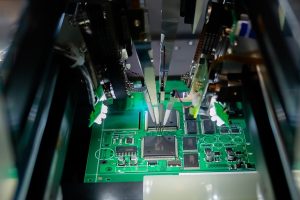
Designing for Modularity and Future Upgrades
A scalable product starts with a design that anticipates change. Modular architecture allows systems to be updated or expanded without requiring a complete redesign. Instead of building a fixed, closed system, engineers create platforms where components, boards, or software elements can be modified independently.
This approach makes it easier to introduce new features or performance improvements over time. For example, a communication module might be upgraded without altering the entire device, or a power subsystem may be improved while maintaining compatibility with existing assemblies.
Modularity also reduces development time for future revisions. Instead of reengineering a full system, teams can focus on specific modules, lowering the cost and accelerating time to market for updated versions.
Scaling Production Without Disrupting Quality
As demand grows, we rely on production to scale smoothly without introducing variables or quality issues. ECMs support this transition by building scalable manufacturing processes that can expand from prototype runs to full production volumes without a major reconfiguration.
This requires careful planning of tooling, supplier capacity, and assembly workflows. Processes are standardized early so that increases in volume do not compromise consistency or performance.
Scalable production planning also helps avoid bottlenecks. By forecasting demand and aligning supply chain capacity in advance, manufacturers can be sure that growth does not lead to delays or shortages.
The result is a production system that grows alongside the product, maintaining reliability at every stage of expansion.
Applying Design-for-Manufacturing Principles
One of the most effective ways to future-proof a product is through design-for-manufacturing (DFM) principles. DFM confirms that a product is not only functional but also optimized for efficient, repeatable production.
This includes simplifying assembly processes, reducing part complexity, and selecting components that are widely available and easier to source long term. These decisions help reduce manufacturing variability and improve scalability.
DFM also supports future revisions. When a product is designed with manufacturability in mind, it becomes easier to introduce updates or alternate configurations without disrupting the entire production process.
By aligning design and manufacturing early, ECMs help prevent costly redesigns later in the product lifecycle.
Leveraging ECM Experience to Anticipate Market Changes
Experienced ECMs bring more to a project than production capability. They carry cross-industry insight gained from supporting a wide range of product types, lifecycles, and market conditions. This broader perspective allows them to recognize patterns in how products evolve over time and where common points of failure or constraint tend to emerge.
That experience becomes especially valuable when planning for long-term product success. Shifts in component availability, evolving regulatory requirements, and rising performance expectations can all significantly impact a product after launch. ECMs are often able to identify these pressure points early, before they create redesign urgency or supply chain disruption. This includes forecasting component obsolescence risks, anticipating certification updates in regulated industries, and understanding where performance demands are trending based on adjacent markets.
By incorporating this insight during the design and planning phase, ECMs help guide more strategic engineering decisions. This might involve selecting components with longer lifecycle stability, designing modular subsystems that can be upgraded independently, or structuring assemblies in a way that reduces dependence on single-source parts. These choices may not change the immediate functionality of a product, but they can significantly affect how easily it can adapt in the future.
This forward-focused approach reduces the likelihood of reactive redesigns driven by external pressure. Instead of being forced into costly changes after market or supply chain conditions shift, companies are better positioned to evolve their products in a controlled and intentional way. Updates and improvements can be introduced as part of a planned roadmap rather than urgent corrections.
The end result is a more resilient and adaptable product strategy. Products are not only designed for current requirements but are also structurally prepared for future change, enabling continuous improvement without compromising stability, quality, or production continuity.
Supporting Lifecycle Management and Obsolescence Planning
Every electronic product eventually faces component obsolescence. Parts are discontinued, suppliers change, and technologies evolve. Without proper planning, these changes can force costly redesigns or disrupt production.
ECMs help manage this challenge through proactive lifecycle planning. This includes monitoring component availability, identifying potential end-of-life parts, and recommending approved alternatives before shortages occur.
In some cases, lifecycle planning may involve redesigning specific modules to ensure long-term availability while preserving overall system functionality. These updates are carefully managed to maintain compatibility and minimize disruption.
By planning for obsolescence early, manufacturers help extend the usable life of a product and reduce long-term risk for clients.
Building Products That Are Ready to Evolve
Sustainable product success in electronic manufacturing depends on more than a strong initial design. It depends on whether that design can adapt over time as performance expectations change, components evolve, and market demands shift. Without that flexibility, even well-built products can quickly become costly to maintain or difficult to scale.
Scalable ECM support brings structure to this evolution. Through modular design approaches, disciplined manufacturing planning, and design-for-manufacturability principles, products are built with future growth in mind rather than limited to a single release cycle. When paired with proactive lifecycle and obsolescence management, we can help reduce disruption and extend the usable life of your device.
Just as important, ECM experience helps companies anticipate change instead of reacting to it. That foresight allows improvements, upgrades, and production expansions to happen in a controlled and efficient way, without compromising reliability or quality.
In the end, scalability is not only about producing more units or adding new features. It is about creating products that can move with the market, evolve with technology, and remain dependable throughout their entire lifecycle.
To learn more about how we can help you bring a better product to market, contact Levison Enterprises today.
Start Your Quote Now!