What is the difference between SMT and SMD For An Electronic Manufacturer?
Many businesses evaluating an electronic manufacturing service encounter the terms SMT and SMD but are unsure how they differ or why the distinction matters. This article is written for engineers, product developers, procurement teams, and companies researching PCB assembly and electronic manufacturing. The perspective reflects Levison Enterprises’ experience manufacturing reliable electronic assemblies using modern surface mount technology. It explains the difference between SMT and SMD, how they work together during PCB assembly, and why understanding both can help you choose the right electronic manufacturing partner.
If you are researching PCB assembly or electronic manufacturing services, you have probably come across the terms SMT and SMD repeatedly. They are often used interchangeably, which can make the entire process confusing because they are not the same thing.
While they are closely connected, one refers to the manufacturing process (SMT) and the other refers to the actual electronic component (SMD).
For companies developing modern electronic devices, knowing how SMT and SMD work together can help you choose the right manufacturing partner and avoid costly production inefficiencies.
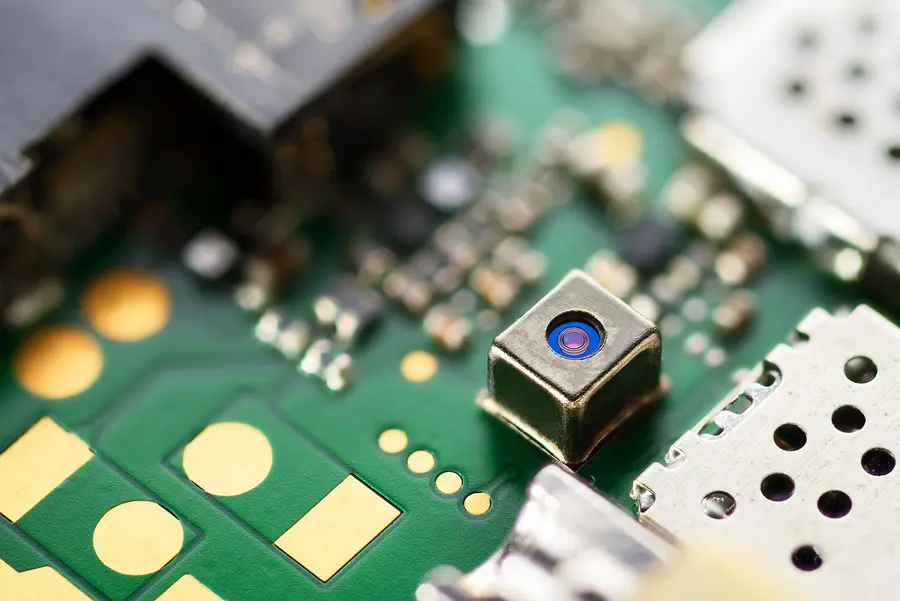
The Simple Difference Between SMT and SMD
The easiest way to understand the difference is this:
- SMD stands for surface-mounted device
- SMT stands for surface mount technology
An SMD is the actual electronic component placed onto a printed circuit board (PCB). These can include resistors, capacitors, transistors, integrated circuits, and other miniature components.
SMT is the process used to place and solder those components onto the PCB surface.
In other words, the SMD is the “thing” and SMT is the “method.”
The two work together constantly in modern electronic manufacturing, which is why the terminology often gets blurred together.
Why Older PCB Assembly Methods Became a Problem
Before SMT became the industry standard, manufacturers primarily used through-hole technology.
In through-hole assembly, component leads were inserted through drilled holes in the circuit board and soldered into place. While this method was reliable for larger devices, it created major limitations as technology evolved.
Electronic devices became smaller and more complex. Consumers expected faster performance in more compact products. Suddenly, older assembly methods struggled to keep up.
Through-hole manufacturing created several challenges:
- Larger components consumed more board space.
- Drilling holes added manufacturing time and expense.
- Boards could not efficiently utilize both sides.
- Manual assembly increased labor costs.
- Production speeds were slower.
- Larger designs limited innovation.
As industries pushed toward miniaturization, manufacturers needed a faster and more precise solution.
That solution became SMT and SMD technology.
What Are Surface Mounted Devices (SMDs)?
Surface mounted devices are compact electronic components designed specifically for automated placement directly onto a PCB surface.
Unlike traditional through-hole components, SMDs do not require long wire leads to pass through drilled holes in the board. Instead, they use small connection points that are soldered directly onto pads on the PCB.
Smaller Components Create More Functional Boards
Because SMDs are significantly smaller, manufacturers can place far more components onto a single board. This allows engineers to create highly functional electronic devices while reducing overall product size.
This is one of the reasons we can fit advanced computing power into compact devices like:
- Smartphones
- Wearable technology
- Medical devices
- Automotive electronics
- GPS systems
- Industrial automation equipment
Smaller components also allow manufacturers to design lighter products while maintaining strong performance capabilities.
SMDs Improve Manufacturing Efficiency
SMDs were specifically designed for automation.
Their uniform sizing and placement capabilities allow modern assembly equipment to position components rapidly and accurately. This dramatically reduces manual labor requirements and helps manufacturers maintain consistency across large production runs.
For companies producing high volumes runs, this efficiency can create substantial cost savings over time.
What Is Surface Mount Technology (SMT)?
Surface mount technology is the automated manufacturing process used to place and solder SMDs onto printed circuit boards.
Modern SMT assembly lines are highly precise systems built for speed, repeatability, and quality control.
While the process may look seamless from the outside, multiple carefully controlled stages are
involved.
How the SMT Process Works
1. Solder Paste Application
The process begins with solder paste being applied to specific areas of the PCB using a stencil. The paste contains a mixture of flux and microscopic solder particles.
Accuracy during this stage is critical because improper paste application can lead to poor solder joints or component failures.
2. Pick and Place Machine Assembly
Next, automated pick and place machines position the SMDs onto the board.
These machines can place thousands of components per hour with extraordinary precision. Advanced systems use high-speed vision technology to ensure accurate alignment and orientation.
3. Reflow Soldering
Once components are positioned, the board moves through a reflow oven where carefully controlled heat melts the solder paste and permanently bonds components to the PCB.
Temperature consistency is essential during this phase to avoid damaging sensitive components or creating weak solder connections.
4. Inspection and Quality Control
After soldering, the boards are inspected using Automated Optical Inspection (AOI) systems.
These systems verify:
- Component alignment
- Solder joint quality
- Missing components
- Improper polarity
- Manufacturing defects
This level of inspection helps manufacturers maintain reliability and consistency across every production run.
Why SMT Became the Industry Standard
SMT rapidly gained popularity throughout the 1980s because it solved many of the limitations associated with older PCB assembly methods.
Today, SMT dominates modern electronic manufacturing because it offers major advantages in several critical areas.
Faster Production Speeds
Automated SMT equipment can assemble boards dramatically faster than manual assembly processes.
This allows manufacturers to scale production efficiently while reducing lead times for customers.
Improved Precision
Modern SMT equipment delivers extremely accurate component placement, which reduces manufacturing defects and improves long-term product reliability.
Lower Manufacturing Costs
Because SMT increases automation and minimizes manual labor, manufacturers can reduce overall production costs while improving consistency.
Better Product Performance
Smaller components and shorter electrical pathways can improve signal integrity, electrical performance, and thermal efficiency.
More Compact Electronic Devices
SMT allows engineers to create highly sophisticated products in smaller form factors, which is essential.
Where SMT and SMD Work Together
SMDs and SMT are not competing technologies. They are complementary parts of the same manufacturing ecosystem.
Without SMDs, SMT would not exist. Without SMT, the full advantages of SMDs could not be realized efficiently at scale.
Together, they allow manufacturers to produce devices and components that are:
- Smaller
- Faster
- More reliable
- More affordable
- More complex
- Easier to mass produce
As electronic devices continue becoming smaller and more advanced, the importance of SMT and SMD technology will only continue growing.
Choosing an Electronic Manufacturing Partner Matters
Even with advanced SMT equipment, manufacturing quality still depends heavily on the experience and capabilities of the electronic manufacturer.
Poor process control, inconsistent soldering practices, outdated equipment, or inadequate inspection procedures can lead to product failures, costly delays, and reliability issues.
The right partner helps ensure your PCB assemblies meet both performance expectations and long-term reliability standards.
SMT and SMD Capabilities at Levison Enterprises
At Levison Enterprises, SMT is a core part of how we deliver precision PCB assembly solutions for our customers.
We utilize advanced SMT processes and equipment to improve production efficiency, maintain accuracy, and support high-quality manufacturing outcomes. Our eight-stage reflow oven provides greater temperature control throughout the soldering process, helping us achieve consistent and reliable results across every board we assemble.
We also recognize the value that SMDs bring to modern electronic manufacturing. Smaller, more efficient components help maximize board space, improve functionality, and reduce unnecessary material usage whenever possible.
The conversation is not really SMT versus SMD because both technologies work together to support modern PCB assembly.
Our goal is simple. We want to help customers produce reliable, high-quality electronic products as efficiently and cost effectively as possible.
If you are looking for an electronic contract manufacturing partner that understands the importance of precision, efficiency, and quality control, contact Levison Enterprises today to discuss your next PCB assembly project.
SMT and SMD FAQs
What is the difference between SMT and SMD?
SMT (Surface Mount Technology) is the manufacturing process used to place electronic components onto a printed circuit board, while SMD (Surface Mounted Device) refers to the individual electronic components mounted during that process.
What is an SMD in electronic manufacturing?
An SMD is a surface-mounted electronic component, such as a resistor, capacitor, diode, or integrated circuit, that is designed to be soldered directly onto the surface of a printed circuit board (PCB).
Why is SMT used in PCB assembly?
SMT enables an electronic manufacturing service to assemble PCBs with greater speed, precision, and consistency than traditional through-hole methods. It also supports higher component density and more compact product designs.
Is SMT better than through-hole technology?
For most modern applications, SMT offers faster production, lower manufacturing costs, improved reliability, and smaller PCB designs. Through-hole technology is still used for certain components that require greater mechanical strength or specialized performance.
How does an electronic manufacturer ensure quality during SMT assembly?
A reputable electronic manufacturer uses automated solder paste application, pick-and-place machines, controlled reflow soldering, and Automated Optical Inspection (AOI) to verify proper component placement and solder joint quality.
What industries use SMT and SMD technology?
SMT and SMD technology are widely used in aerospace, medical devices, automotive electronic devices, industrial automation, telecommunications, and consumer electronics because they support reliable, high-performance electronic assembly.
What should I look for in an electronic manufacturing service for SMT assembly?
Choose an electronic manufacturing service with modern SMT equipment, strong quality control processes, experienced engineers and technicians, and the ability to produce consistent, high-quality electronic assemblies that meet your production requirements.
Start Your Quote Now!