Box Build vs. PCB Assembly: Key Differences and Considerations
PCB assembly and box build assembly each play an important role in electronic manufacturing, but they serve different purposes. This article explains the differences between the two, when each is the right choice, and how selecting the appropriate manufacturing approach can improve product quality, efficiency, and time to market.
In electronic manufacturing, the path from concept to finished product is rarely as simple as building a circuit board.
Most products require more than a PCB. They need wiring, enclosures, mechanical structures, connectors, and sometimes even software configuration and final testing. At some point in development, teams are faced with a decision that has a direct impact on cost, timeline, and product reliability.
Should you stop at PCB assembly, or move forward with a full box build?
Choosing incorrectly can lead to unexpected rework, production delays, or integration issues that only appear after assembly has already begun. Choosing correctly can streamline manufacturing, reduce handling, and improve overall system performance.
Understanding the difference between PCB assembly and box build assembly helps prevent those issues before they start.
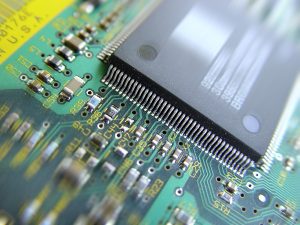
What PCB Assembly Focuses On
PCB assembly is the foundation of most electronic products. It involves placing and soldering electronic components onto a printed circuit board so the circuit itself functions as designed.
This process typically includes surface mount technology, where components are mounted directly onto the board, and through-hole assembly, where leads are inserted into drilled holes and soldered in place. The result is a fully populated circuit board that can perform its electrical function.
At this stage, the product is still only one part of a larger system. The PCB may work perfectly on its own, but it is not yet a complete, usable product.
PCB assembly is often the most efficient and cost-effective stage of manufacturing. It is well suited for standardized designs, high-volume production, and applications where the board will later be integrated into a larger system.
What Box Build Assembly Adds to the Process
Box build assembly goes beyond the circuit board and focuses on the complete finished product.
Instead of delivering a standalone PCB, the manufacturer integrates the board into a fully assembled system. This includes installing the PCB into an enclosure and connecting it to other mechanical and electrical components such as wiring harnesses, connectors, switches, power supplies, displays, and mounting hardware.
In many cases, the process also includes cable routing, internal assembly of subcomponents, labeling, system configuration, and final testing.
The goal of a box build is not just to make the device function, but to deliver a complete product that is ready for installation or end use.
Where PCB Assembly Ends and Box Build Begins
The key difference between these two approaches is not just what is built, but how complete the final deliverable needs to be.
PCB assembly stops at the circuit board. It ensures the electrical system functions correctly at the board level but does not account for enclosure design, mechanical integration, or full system assembly.
Box build assembly continues beyond that point. It focuses on how the PCB interacts with every other part of the product, including mechanical structures and user-facing components.
A useful way to think about it is this: PCB assembly builds the brain of the product, while box build assembly builds the entire body around it.
Mechanical Integration and System Complexity
One of the biggest advantages of box build assembly is that it accounts for mechanical and electrical systems at the same time.
Once a PCB is placed inside an enclosure, everything must align correctly. Mounting points, cable routing, airflow, access panels, and structural components all need to work together. Even small design mismatches can create assembly issues or long-term reliability concerns.
PCB assembly does not address these challenges directly because it focuses only on the board itself. That is why products with higher mechanical complexity often require box build integration to ensure everything fits and functions as intended.
Cost and Production Considerations
From a manufacturing standpoint, PCB assembly is typically faster and more cost-efficient. It is optimized for repeatable production and works well when the scope is limited to the circuit board itself.
Box build assembly requires more coordination because it includes multiple stages of production. Components must be sourced, enclosures must be prepared, wiring must be routed, and systems must be tested as a complete unit.
This additional complexity can increase lead time and cost, but it also reduces the need for multiple vendors and simplifies final product delivery. Instead of managing separate suppliers for boards, wiring, and assembly, everything is handled in a single integrated process.
For many companies, that tradeoff results in fewer delays and better consistency.
Flexibility and Product Development Stage
PCB assembly is often the preferred choice during early product development or when working with standardized designs. It allows engineers to validate circuit performance without committing to full system integration.
Box build assembly becomes more valuable as the product matures. Once the design is finalized and the goal shifts toward delivering a complete product, integration becomes just as important as circuit performance.
It also offers more flexibility for customized products that require unique enclosures, wiring configurations, or system-level testing.
Choosing the Right Approach
The decision between PCB assembly and box build assembly ultimately depends on how complete your final product needs to be at the time of delivery.
If you are only building the electronic circuit or preparing a board for later integration, PCB assembly is often sufficient. If you need a fully functional, enclosed system that is ready for end use, box build assembly is usually the better fit.
Most complex products actually rely on both. PCB assembly forms the core of the design, while box build assembly completes the system.
Bringing It All Together
Understanding the relationship between PCB assembly and box build assembly helps eliminate confusion during the manufacturing process and leads to better planning, fewer surprises, and more efficient production.
Instead of treating them as competing options, it is more accurate to view them as connected stages in the same manufacturing journey.
At Levison Enterprises, we support both electronic assembly and full box build integration, helping customers move seamlessly from circuit design to complete system production. Whether you are developing a simple electronic board or a fully integrated electromechanical system, the right manufacturing approach can significantly impact cost, reliability, and time to market.
Choosing the right path early helps ensure your product is built efficiently, performs reliably, and is ready for real-world use. Contact us today to learn more about how we can help you bring a better product to market.
FAQs About PCB and Box Build Assembly
What is the difference between PCB assembly and box build assembly?
PCB assembly focuses on building the printed circuit board by placing and soldering electronic components onto the board. Box build assembly goes beyond the PCB by integrating the board with enclosures, wiring, mechanical components, connectors, and other parts to create a complete finished product.
What does PCB assembly include?
PCB assembly includes processes such as component placement, surface mount technology (SMT), through-hole assembly, soldering, and testing to ensure the circuit board functions properly. The finished product is a completed PCB that can be integrated into a larger system.
What is box build assembly?
Box build assembly is a complete electronic manufacturing service that integrates a PCB with all additional components needed for a finished product. This may include enclosures, wiring harnesses, connectors, displays, power supplies, mechanical hardware, labeling, configuration, and final testing.
When should I choose box build assembly over PCB assembly?
You should consider box build assembly when you need a fully integrated product that is ready for installation or end use. Box build is often the better option for products that require mechanical integration, custom enclosures, complex wiring, or complete system testing.
Is box build assembly more expensive than PCB assembly?
Box build assembly typically involves more manufacturing steps and coordination, which can increase upfront costs compared to PCB assembly. However, it can reduce overall production complexity by combining multiple manufacturing processes under one electronic manufacturing service provider.
Can the same manufacturer provide both PCB assembly and box build assembly?
Yes. Many electronic manufacturers offer both PCB assembly and box build assembly services. Working with one manufacturing partner can simplify production, improve communication, reduce handling between suppliers, and create a more consistent final product.
What are the benefits of using a box build assembly service?
Box build assembly provides several advantages, including streamlined production, improved system integration, and final product testing before delivery. It allows companies to receive a complete, ready-to-use product instead of managing multiple assembly stages independently.
How does box build assembly improve product reliability?
Box build assembly improves reliability by addressing electrical and mechanical integration together. Manufacturers can verify that components, wiring, enclosures, mounting points, and other systems work together correctly before the product reaches consumers.
Is PCB assembly or box build assembly better for product development?
The best option depends on the stage of product development and the final product requirements. PCB assembly is often ideal for early development, testing, or products where the board will be integrated later. Box build assembly is better when the goal is to produce a complete, market-ready system.
What should I look for in an electronic manufacturing service provider?
When choosing an electronic manufacturing service provider, look for experience with PCB assembly, box build integration, testing capabilities, quality certifications, and the ability to support your product from initial assembly through final production.
Start Your Quote Now!