Build a Trusted Medical Device with Scalable Manufacturing
Medical device companies often face challenges when moving from prototype to full-scale production, especially when quality, compliance, and consistency must be maintained at every stage. This article is written for engineers, product teams, and decision-makers involved in medical device development and manufacturing. The perspective reflects experience supporting OEMs through scalable production processes. It covers how scalable manufacturing helps bridge the gap between early-stage design and reliable, repeatable production while maintaining performance and quality standards.
A promising medical device concept can lose momentum quickly when the realities of production set in. Early prototypes may perform well in controlled environments, but scaling that success into consistent, compliant, high-volume manufacturing is where many projects encounter friction. Reliability, regulatory requirements, and time-to-market pressures all converge at this stage.
This is where an experienced electronic contract manufacturer (ECM) becomes more than a vendor. The right partner functions as an extension of your team, helping you move from concept to commercialization with fewer setbacks and greater confidence in your final product.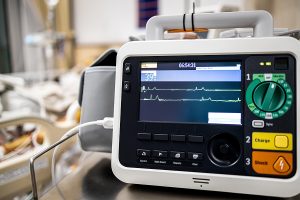
Designing Medical Devices for Reliability From the Start
Reliability is not something that can be added at the end of the process. It has to be built into the design from day one. Medical devices operate in environments where failure is not an option, whether they are used in hospitals, laboratories, or patient homes.
An ECM with medical device experience understands how design decisions impact long-term performance. Component selection, PCB layout, thermal considerations, and environmental factors all play a role in how a device will perform over time. Small oversights early in development can lead to costly redesigns, delays, or even regulatory issues later.
By leveraging the experience of a trusted ECM, medical device companies can identify potential risks before they become problems. Engineers can evaluate design choices with manufacturability in mind, so your product is not only functional but also stable, repeatable, and built for real-world use.
Scaling Production Without Compromising Quality
Transitioning from prototype to full-scale production is one of the most critical phases in medical device manufacturing. What works for a small batch does not always translate seamlessly to higher volumes.
Scaling production requires careful planning, process control, and consistency across every unit produced. An ECM helps establish standardized manufacturing processes that maintain quality regardless of volume. This includes everything from automated assembly and inspection to documented workflows that reduce variability.
Supply chain management also becomes increasingly important at scale. Reliable sourcing, lifecycle management of components, and contingency planning all help prevent disruptions that could impact production timelines or product quality.
Integrating Design Support Early in the Process
One of the most effective ways to avoid delays and unexpected costs is to involve manufacturing expertise early in the design phase. Too often, products are designed in isolation and only evaluated for manufacturability later, leading to revisions that could have been avoided.
An ECM provides design for manufacturability (DFM) insights that align product design with production capabilities. This includes optimizing layouts for assembly, selecting components that are readily available, and designing with testing and inspection in mind.
Early collaboration also improves communication between teams. Engineers, designers, and manufacturing teams can work together to refine the product before it reaches production, reducing the need for rework and accelerating the overall timeline.
When design and manufacturing are aligned from the beginning, the result is a smoother transition into production and a more reliable final product.
Meeting Regulatory and Compliance Requirements Efficiently
Medical devices are subject to strict regulatory standards, and compliance is a fundamental part of the manufacturing process. Navigating these requirements can be complex, especially for companies bringing new products to market.
An experienced ECM understands the regulatory landscape and incorporates compliance into every stage of production. This includes adhering to quality management systems, maintaining proper documentation, and ensuring traceability of components and processes.
Working with a partner that is familiar with standards like ISO 13485 helps streamline the path to regulatory approval. Instead of treating compliance as a separate hurdle, it becomes an integrated part of the workflow.
This approach not only reduces risk but also helps avoid delays that can arise from incomplete documentation or inconsistent processes.
Ensuring Consistent Performance Across the Product Lifecycle
A medical device does not stop evolving once it reaches the market. Ongoing production, updates, and potential design adjustments all require a consistent and controlled approach.
An ECM supports the entire product lifecycle by maintaining detailed records, managing component obsolescence, and implementing continuous improvement processes. If a component becomes unavailable or a design needs to be updated, the transition can be handled without disrupting production or compromising quality.
Testing and validation also remain critical throughout the lifecycle. Consistent performance across batches ensures that every device meets the same standards as the original design, reinforcing reliability and trust.
This long-term support allows medical device companies to focus on innovation and growth, knowing that their manufacturing processes will remain stable and dependable.
A Smarter Path from Concept to Commercialization
Bringing a medical device to market is a complex process that demands precision, coordination, and expertise at every stage. Partnering with an experienced electronic contract manufacturer provides the support needed to navigate these challenges effectively.
From building reliability into the initial design to scaling production and maintaining compliance, an ECM plays a huge role in delivering a medical device that performs as intended. More importantly, they help create a foundation for long-term success with consistency, efficiency, and adaptability.
When manufacturing is treated as a strategic partnership rather than a transactional step, the result is a stronger, more resilient product that is ready to meet the demands of the healthcare industry.
Turn Your Medical Device into a Market-Ready Success
Getting a medical device to market is not just about proving your concept works. It is about proving it can work consistently, safely, and at scale. That level of confidence does not come from design alone. It comes from aligning design, engineering, and manufacturing from the very beginning.
The right electronic contract manufacturer brings more than production capabilities. They bring the experience to anticipate challenges, the structure to maintain quality at every stage, and the flexibility to grow with your product. With the right partner in place, you are not reacting to problems as they arise. You are preventing them before they have a chance to impact your process.
If your goal is to build a medical device that performs reliably in the real world and stands up to the demands of scaling production, the path forward is clear. Partner with a team that understands what it takes to get there and has the processes in place to support you every step of the way. As an industry leader, Levison Enterprises can take your medical device to the next level. Contact us today for a quote.
Start Your Quote Now!