5 Historical Events That Shaped PCBs For Electronic Manufacturers
Printed circuit boards are at the core of nearly every electronic device, but the technology has evolved through decades of innovation. This article explores five key historical developments that transformed PCB manufacturing and helped shape the modern electronics industry.
Today’s printed circuit boards are easy to take for granted.
They power everything from smartphones and medical devices to industrial equipment, aerospace systems, and military technology. Yet the compact, reliable PCBs used in modern electronic devices are the result of more than a century of innovation.
Before printed circuit boards existed, electronic devices relied on complex point-to-point wiring systems. Every connection required a separate wire, making products larger, heavier, more difficult to manufacture, and more prone to failure.
The evolution of the PCB solved many of these challenges and helped make modern electronic devices possible.
Here are five pivotal developments that shaped the history of printed circuit boards and transformed electronic assembly.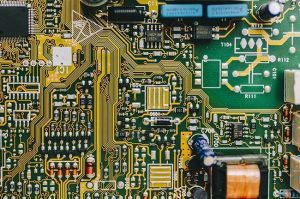
The Rise of Wireless Communication Created a Need for Better PCBs
The story begins in 1895 when Italian inventor and physicist Guglielmo Marconi successfully demonstrated long-distance wireless communication.
Marconi’s radio telegraph system revolutionized communications by allowing messages to be transmitted without physical wires connecting locations. The technology would later play a significant role in maritime safety, including rescue efforts following the sinking of the Titanic.
While groundbreaking, the electronic equipment of the era was far from efficient. Devices relied on extensive point-to-point wiring, with individual wires connecting each component within the system. As devices became more sophisticated, these wiring methods became increasingly cumbersome and unreliable.
Engineers needed a better way to organize and connect electronic components. That challenge would ultimately lead to one of the most important inventions in electronic history.
Paul Eisler Invented the First Printed Circuit Board
In 1936, Austrian engineer Paul Eisler introduced what would become the foundation of modern PCB technology.
Rather than connecting components with individual wires, Eisler proposed printing conductive pathways directly onto an insulating surface. Components could then be mounted onto the board, dramatically simplifying assembly and reducing the complexity of electronic devices.
The concept was revolutionary. By replacing manual wiring with printed circuits, manufacturers could improve consistency, reduce labor requirements, and create more compact designs.
Despite the promise of the technology, adoption was slow. Eisler struggled to find commercial support for his invention, and widespread demand for printed circuit boards had not yet emerged.
That would soon change.
World War II Accelerated PCB Adoption
Many technological advances gain momentum during periods of urgent need, and printed circuit boards were no exception.
During World War II, Allied forces sought more reliable electronic systems for military applications. One critical innovation was the proximity fuse, a device capable of automatically detonating a projectile when it approached its target.
The fuse relied on miniature radio technology that would have been difficult to manufacture using traditional wiring methods. Printed circuit boards offered a practical solution by reducing size while improving reliability and production efficiency.
The success of these military applications demonstrated the value of PCB technology on a larger scale. Following the war, demand for printed circuit boards increased rapidly, and in 1948 the U.S. military began requiring their use in airborne electronic equipment.
What started as a military necessity soon became a foundational technology across the industry.
Automated PCB Assembly Made Mass Production Possible
As electronic devices became more common, manufacturers needed faster and more efficient production methods.
Early PCBs relied on through-hole construction, where component leads were inserted through drilled holes and soldered into place. While effective, the process remained labor-intensive.
A major breakthrough came in 1949 when U.S. Army Signal Corps researchers Moe Abramson and Stanislaus Danko developed an automated assembly process using printed wiring patterns and dip soldering techniques.
Their work helped establish the foundation for modern electronic manufacturing services by introducing repeatable fabrication methods that improved consistency and supported larger production volumes.
The ability to manufacture PCBs more efficiently helped accelerate the growth of consumer electronics, industrial equipment, and communication systems throughout the following decades.
Many of the principles developed during this period continue to influence PCB fabrication today.
Multilayer Boards and Surface Mount Technology Changed Everything
The next major leap occurred as electronic products became smaller and more powerful.
Single-sided boards eventually gave way to multilayer PCBs, allowing engineers to stack conductive layers within a single board. This innovation dramatically increased circuit density while reducing the physical size of electronic devices.
As demand for miniaturization continued to grow, manufacturers adopted surface mount technology (SMT). Rather than inserting component leads through drilled holes, SMT allowed components to be mounted directly onto the board surface.
Although the concept first appeared in the 1960s, widespread adoption occurred during the 1980s as automation capabilities improved.
Surface mount technology transformed electronics manufacturing by enabling:
- Smaller and lighter products
- Higher component density
- Faster assembly processes
- Improved manufacturing efficiency
- Greater design flexibility
Today, SMT remains the dominant assembly method for many electronic devices and continues to support the ongoing trend toward smaller, more capable devices.
What Comes Next for PCB Manufacturing?
The history of printed circuit boards demonstrates a consistent pattern: as electronics become more advanced, manufacturing methods evolve to keep pace.
Modern PCB manufacturers continue to explore new technologies that improve efficiency, performance, and design flexibility. Advanced materials, increasingly automated production systems, and emerging additive manufacturing techniques are already influencing the next generation of electronic assemblies.
One area attracting significant attention is 3D-printed electronics. While still developing, additive manufacturing has the potential to create highly customized circuit designs, reduce material waste, and introduce new possibilities for complex electronic systems.
As these technologies mature, they may represent the next major milestone in PCB evolution.
Innovation Continues to Drive PCB Manufacturing
The printed circuit board has come a long way since the days of point-to-point wiring.
From Marconi’s early radio systems and Paul Eisler’s pioneering designs to wartime innovations, automated assembly processes, and modern surface mount technology, each advancement helped make devices smaller, faster, and more reliable.
Today’s electronic products depend on the lessons learned throughout more than a century of development. As new technologies emerge, PCB manufacturing will continue to evolve alongside the devices it supports.
At Levison Enterprises, we combine proven manufacturing processes with modern PCB assembly capabilities to help customers build reliable electronic products for demanding applications. Whether you’re developing a new product or improving an existing design, our team can help you navigate the technologies and manufacturing methods that bring innovative devices to life. Contact us today to learn more.
FAQs on the History and Evolution of Printed Circuit Boards
What is a printed circuit board (PCB)?
A printed circuit board (PCB) is a board that mechanically supports and electrically connects electronic components using conductive pathways printed onto an insulating material. PCBs are the foundation of nearly every modern electronic device, from consumer electronics to medical and industrial equipment.
Who invented the first printed circuit board?
Austrian engineer Paul Eisler developed the first printed circuit board in 1936. His design replaced complex point-to-point wiring with printed conductive traces, making electronic assembly more efficient and reliable.
What makes printed circuit boards important in electronic manufacturing?
Printed circuit boards simplify electronic assembly by providing a compact, organized way to connect components. They improve reliability, reduce manufacturing time, support automation, and allow electronic manufacturers to produce smaller, more advanced products.
How did World War II influence PCB manufacturing?
World War II accelerated the adoption of printed circuit boards because military applications required smaller, more reliable electronic systems. After the war, PCB technology expanded rapidly into commercial electronic manufacturing and became an industry standard.
What is surface mount technology (SMT)?
Surface mount technology (SMT) is an electronic assembly process where components are mounted directly onto the surface of a printed circuit board rather than inserted through drilled holes. SMT enables higher component density, faster production, and smaller electronic devices.
Why is surface mount technology widely used today?
SMT allows electronic manufacturers to build lighter, more compact products while improving manufacturing efficiency and production speed. It also supports automated assembly processes that increase consistency and reduce production costs.
What is the difference between through-hole and surface mount assembly?
Through-hole assembly requires component leads to be inserted into holes drilled through the PCB before soldering. Surface mount assembly places components directly on the board’s surface, allowing for smaller designs, faster assembly, and higher circuit density.
How have printed circuit boards changed over time?
Printed circuit boards have evolved from simple single-sided boards to complex multilayer designs capable of supporting thousands of components. Advances in materials, automated assembly, and manufacturing technology have made modern electronic devices smaller, faster, and more reliable.
What role does electronic manufacturing services play in PCB assembly?
An electronic manufacturing service provider manages the production of printed circuit boards and electronic assemblies, including component sourcing, PCB assembly, testing, quality control, and final product manufacturing.
What is the future of PCB manufacturing?
PCB manufacturing continues to advance through increased automation, improved materials, and emerging technologies like additive manufacturing and 3D-printed electronics. These innovations are expected to improve efficiency, reduce waste, and enable more complex electronic designs for future products.
Start Your Quote Now!